
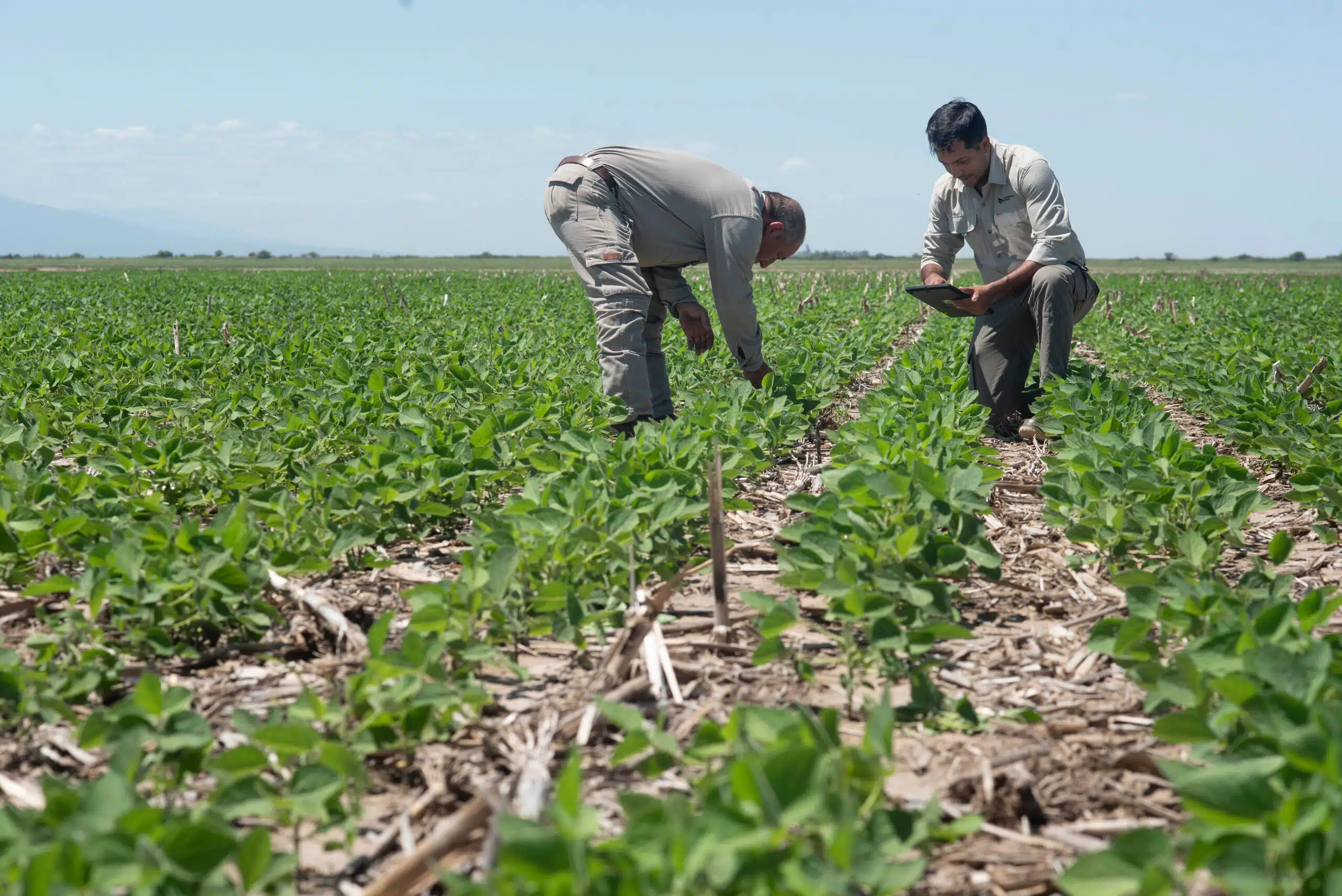
A Sustainable Approach to Production
Agroganadera del NOA continues to strengthen its agricultural model through responsible practices aimed at preserving natural resources and improving production efficiency.
The introduction of new crops such as safflower and sunflower is part of this strategy, expanding the production portfolio and adding value to the agricultural system through crop rotation and diversification schemes.
Crop Diversification for a More Efficient System
Diversification is one of the pillars of responsible agriculture. Introducing new species improves production planning, opens access to different markets, and spreads risks throughout the year.
Currently, the production system includes crops such as soybeans, corn, cotton, peanuts, sorghum, and pulses, along with service crops that strengthen the functioning of the agricultural system.
In addition, this strategy allows for taking advantage of different production windows and optimizing land use in each harvesting season.
Crop Rotation and Soil Conservation
Crop rotation is a key practice for agricultural sustainability, as it helps maintain soil fertility and reduce the need for chemical inputs.
This approach helps prevent erosion, break pest and disease cycles, and improve soil structure, creating more balanced and resilient production systems.
In turn, incorporating crops such as safflower enhances adaptability to water stress conditions, strengthening the stability of the production system.
Service Crops and Agricultural System Regeneration
Service crops play a fundamental role in soil protection and regeneration.
Their implementation helps maintain year-round vegetation cover, improve soil structure, and promote biodiversity, in addition to contributing to nitrogen fixation and reducing dependence on synthetic fertilizers.
These practices are key to moving toward a more regenerative agriculture that is adapted to the challenges of climate change.
Productive Growth with a Positive Impact
The development of a responsible agriculture is also reflected in the expansion of the productive land, accompanied by strategic planning and the addition of new establishments.
For the 2024/2025 season, Agroganadera del NOA projected a sowing area of 39,000 hectares, representing significant growth compared to the previous period.
This growth is achieved through an approach that prioritizes efficiency, sustainability, and the optimization of available resources.
Certifications and Quality Standards
The adoption of agricultural certifications is another fundamental pillar of the production model.
Agroganadera del NOA participates in initiatives such as Algodón Responsable Argentino (ARA) and international certifications such as RTRS, which guarantee responsible production practices, traceability, and compliance with environmental and social standards.
These certifications ensure product quality and also strengthen the company’s position in international markets.
Agriculture Prepared for Future Challenges
Responsible agriculture at Agroganadera del NOA reflects a long-term vision focused on producing more and better, while caring for natural resources and creating sustainable value.
Through a combination of diversification, innovation, and regenerative practices, the company continues to move toward a more efficient and resilient agricultural model that is well-prepared for future challenges.