
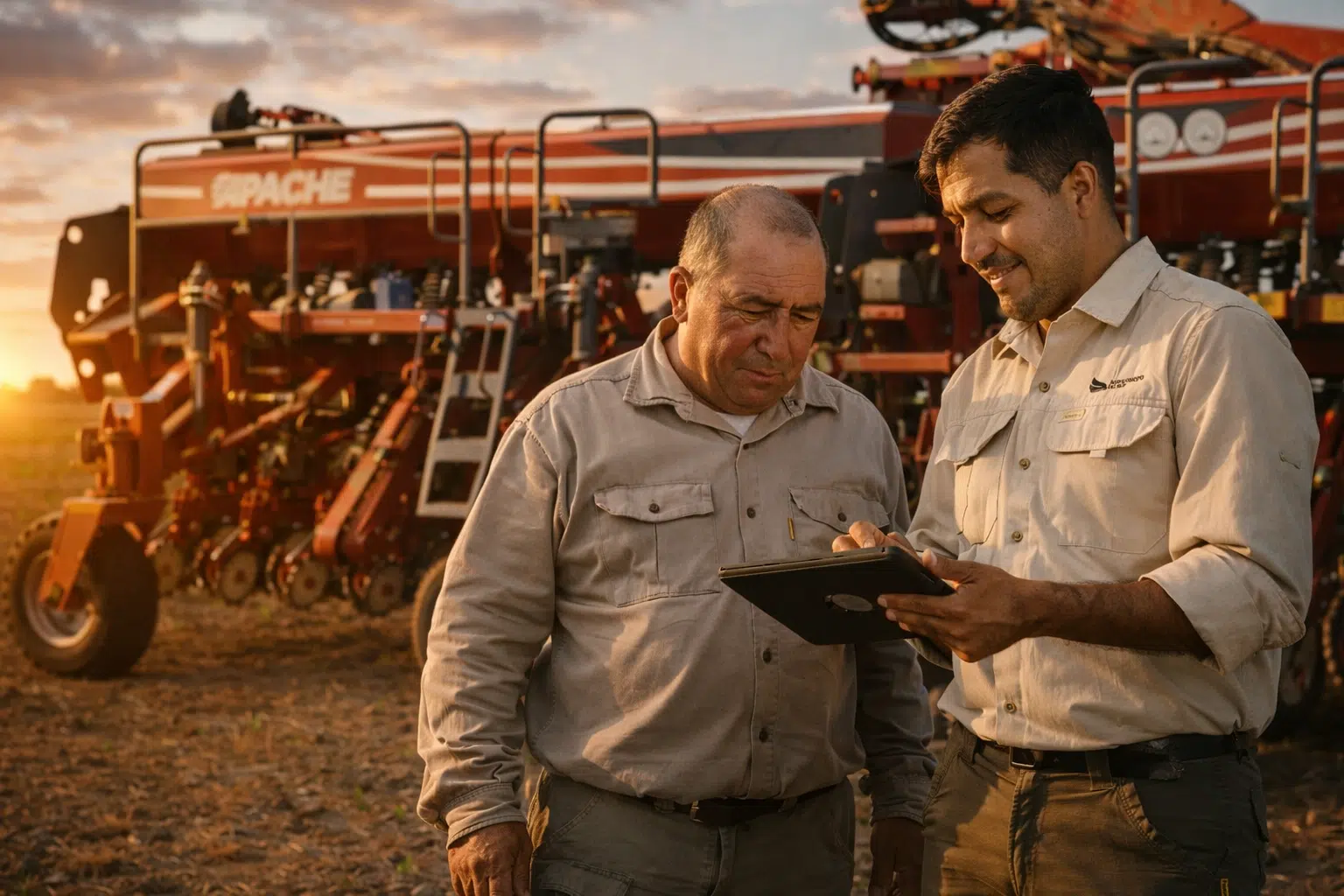
A New Production Paradigm Based on Digitalization
In a context where agriculture faces growing challenges such as climate change and resource optimization, Agroganadera del NOA is moving forward with a digital transformation process that is redefining the way we produce.
The incorporation of technology at every stage of the agricultural cycle improves operational efficiency, optimizes the use of inputs, and paves the way for a more sustainable and reliable production model.
Technology Applied to Every Stage of the Agricultural Process
The digitization of the production system is reflected in the integration of technological tools throughout the entire agricultural cycle.
In soil preparation and sowing, the use of sensors and monitoring systems allows for the selective application of inputs, significantly reducing the use of agrochemicals and improving application efficiency.
During the crop protection stage, digital platforms integrate production and environmental data, facilitating data-driven agronomic decision-making tailored to the specific needs of each field.
During harvesting, storage and dispatch, machine connectivity and management systems enable real-time monitoring of yield, ensure production traceability, and optimize logistics, guaranteeing grain quality at every stage.
Data and Information for Better Decision-Making
One of the cornerstones of digital transformation is the ability to generate, integrate, and analyze data in real time.
The weather stations installed at the establishments allow for the collection of key variables such as temperature, humidity, and wind, providing strategic information to plan tasks and reduce operational risks.
In turn, system integration enables the cross-referencing of data from different tools—from input applications to yield maps—generating a comprehensive view of the production system that improves decision-making.
Systems Integration and Efficient Management
The use of integrated management systems connects field operations with administrative processes, enabling more precise control over each stage of production.
This integration improves planning, optimizes the use of resources, and enhances traceability, resulting in more efficient, reliable processes that are aligned with quality standards.
Innovation and Future Challenges
The digital transformation process continues to evolve with the incorporation of new technologies such as artificial intelligence, advanced sensors, drones, and global connectivity.
These advances will enable us to anticipate scenarios, improve planning, and continue to strengthen a production model that combines competitiveness, efficiency, and sustainability.
Agroganadera del NOA thus reaffirms its commitment to innovation, driving an agriculture that is increasingly technological, precise, and geared toward future challenges.