
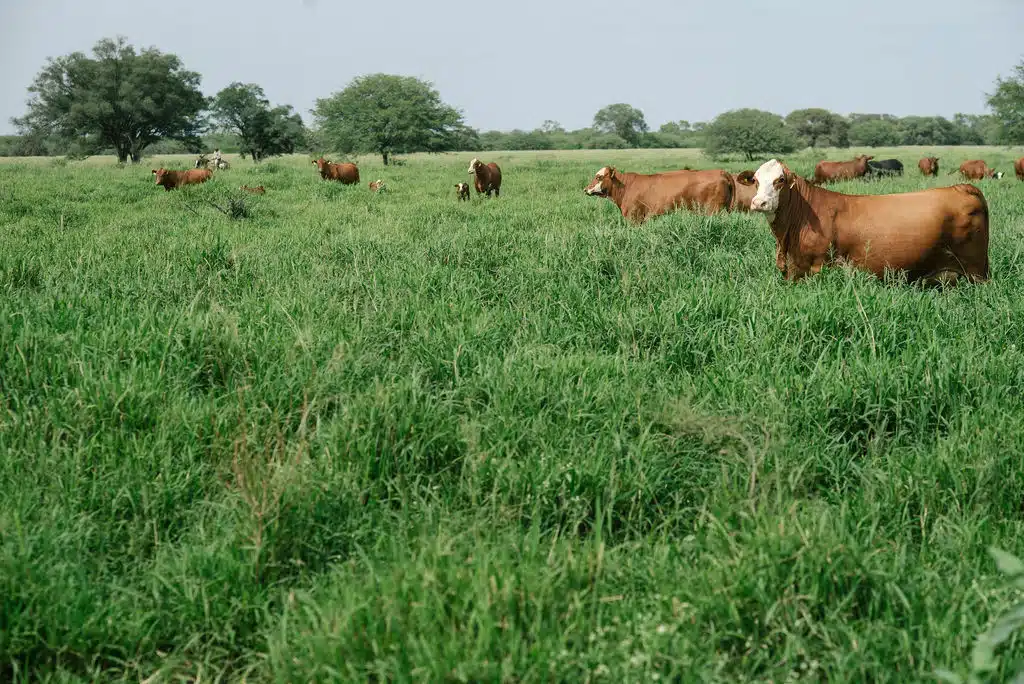
Agroganadera del NOA has reached a new milestone in its journey toward an increasingly efficient and sustainable production: all of its livestock farming establishments now operate under a planned grazing system.
This achievement is the result of a transformation process that began in 2020 at El Carmen and La Porteña establishments, which gradually consolidated and expanded until it covered the company’s 38,593 livestock farming hectares, bringing all its establishments under a single management model.
This progress represents much more than the implementation of a production methodology; it is the foundation upon which the company is building a regenerative livestock farming system, capable of increasing productivity while actively contributing to the health of ecosystems.
Based on a holistic approach that integrates soil, pastures, and animals as parts of a single system, planned grazing promotes the recovery of natural resources, improves productivity, fosters biodiversity, and creates the conditions necessary for greater carbon sequestration in the soil.
The Foundation of Regenerative Livestock Farming
Planned grazing is a key tool in a holistic approach to livestock farming. Its main objective is to organize production taking into account the rest periods that pastures need to recover and reach their maximum productivity.
To this end, planning sessions involving the entire livestock team are held twice a year. During these meetings, plans for the use of forage resources are designed for the following six months.
“During the pasture growth season, we work with an open plan that prioritizes rest periods between grazing, allowing the pasture to recover (grow). This process promotes carbon sequestration by allowing the carbon sink to recharge,” explained Sebastián Reinoso Rojo, Head of Livestock Production.
“On the other hand, during winter, we implement a closed plan aimed at efficiently managing the deferred forage generated during summer,” he added.
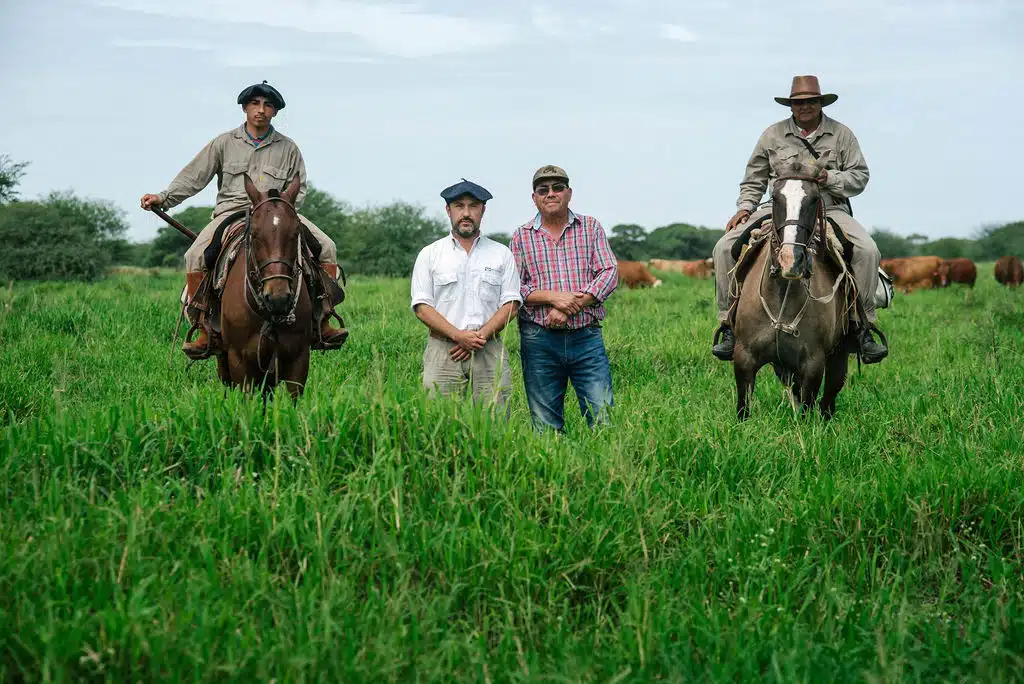
Data-Driven Sustainability
The implementation of planned grazing was the first major step toward holistic management. Today, the challenge lies in making progress in measuring the associated environmental outcomes.
“At El Carmen establishment in Catamarca and La Porteña establishment in Santiago del Estero, efforts are already underway to measure and monitor carbon sequestration and biodiversity, in order to generate data that will allow us to assess the positive impact of these practices on ecosystems.
To this end, the EOV (Ecological Outcome Verification) methodology is being used—an internationally recognized tool applied by organizations specializing in ecosystem services to scientifically quantify indicators related to Soil Organic Carbon (SOC), biodiversity, and ecosystem health,” explained Sebastián.
Looking to the Future
The journey we embarked on in 2020 allowed us to build a solid foundation for the sustainable management of our establishments
Building on this foundation, the organization is moving toward a new phase: measuring, monitoring, and validating these results, generating evidence that will enable us to assess the positive impact achieved and continue refining a livestock farming model that is increasingly regenerative, efficient, and resilient.