
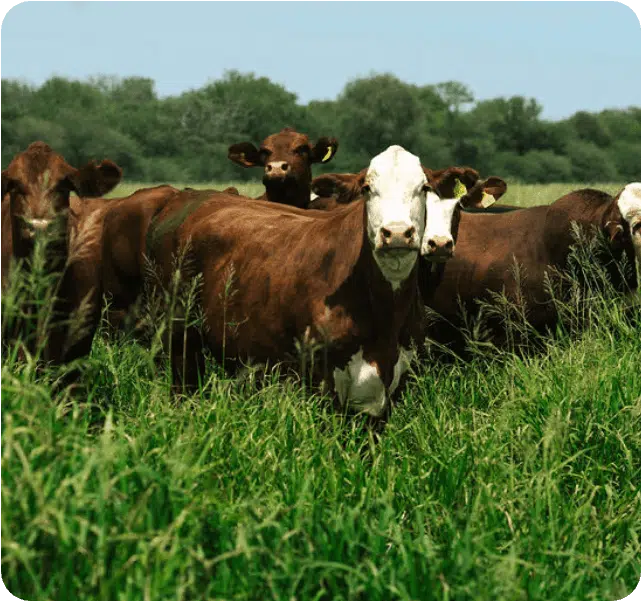
A Livestock Model That Is Growing and Gaining Ground
Agroganadera del NOA continues to strengthen its production system through holistic livestock farming, an approach that combines productivity, soil regeneration, and environmental care.
In 2024, this model saw a 55% growth in the area meant for its implementation compared to the previous year, establishing itself as a strategic pillar within Grupo Lucci’s livestock farming production.
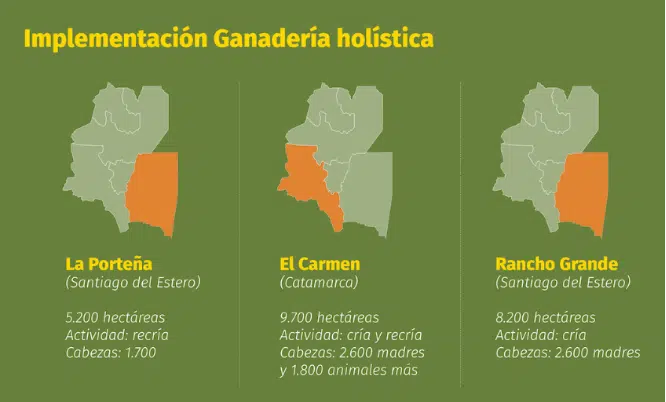
Currently, this model is applied across various establishments and covers more than 23,000 hectares, along with a significant number of animals in production, reflecting its scale and importance within the production system.
Incorporation of New Establishments and Expansion of the Model
One of the most significant milestones was the incorporation of Rancho Grande establishment into the holistic livestock farming system, expanding the area under this management in 2024.
This establishment, with its hectares and head of cattle, joins others where the model was already being implemented, such as El Carmen and La Porteña, strengthening the growth and consolidation strategy.
This expansion allows for scaling up the system’s positive impact, both in terms of production and the environment.
Holistic Livestock Farming: Planning, Management, and Regeneration
Holistic livestock farming is based on comprehensive planning of grazing and land use, integrating production, environmental, and animal management criteria.
This approach optimizes forage availability, improves system efficiency, and creates a balance between the soil, pastures, and livestock.
Additionally, incorporating service crops into livestock farming systems allows for the production of forage at key times of the year, improving feed quality and strengthening the system as a whole.
Productive and Environmental Benefits of the Model
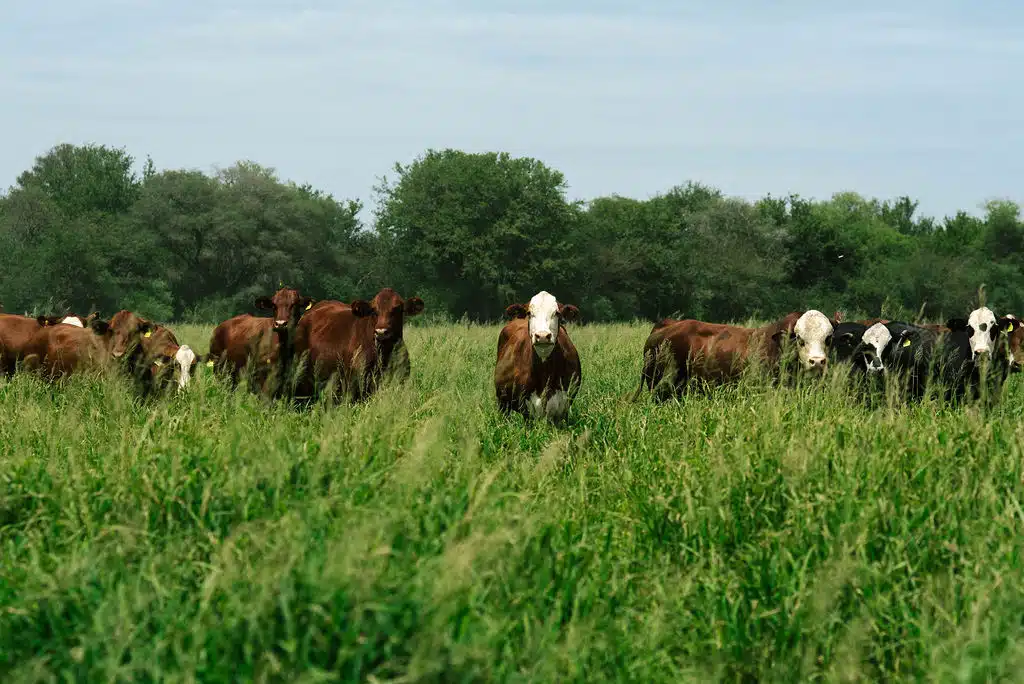
The implementation of holistic livestock farming generates positive impacts on both productivity and the environment.
Among its main benefits are improved soil fertility, increased organic matter, greater water retention, and pasture regeneration, which contribute to systems that are more resilient to variable weather conditions.
Furthermore, this model promotes carbon sequestration and biodiversity conservation, contributing to climate change mitigation and ecosystem balance.
Looking Ahead: Scaling Up Regenerative Livestock Farming
The growth achieved reflects a clear long-term strategy: to continue expanding the area under holistic management and to consolidate an increasingly efficient and sustainable livestock farming model.
The goal is to extend this approach to all livestock farming establishments, strengthening productive capacity and generating a positive impact on the environment.
In this way, Agroganadera del NOA continues to move toward modern, regenerative livestock farming that is aligned with future challenges.